
THE PRINCIPLES OF DESIGN: HIERARCHY
What Makes Your Eye Notice One Thing Before Another?
Have you ever walked into a room and felt immediately at ease — like everything just made sense? That clarity comes from hierarchy.
Hierarchy is what tells your eye what’s important, what’s secondary, and what supports the overall story. Without it, a room feels confusing or busy. With it, a space feels confident and intentional.
Hierarchy can be created through scale, color, architecture, lighting, placement, or simply by giving one element more visual weight than the others.
Here are a few examples of how we use hierarchy in our designs.
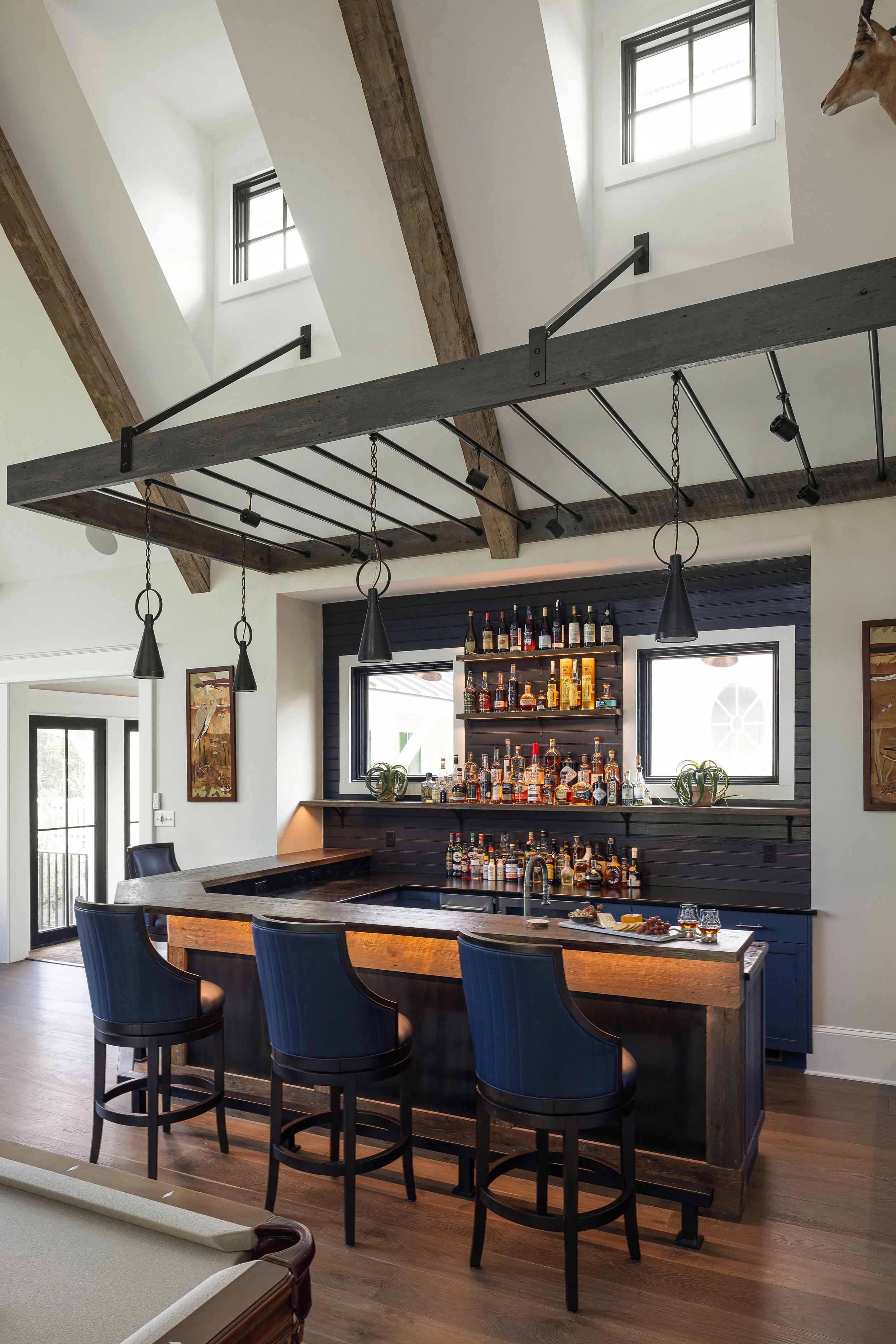
This cozy bar is tucked into the corner of a very large carriage house great room. We designed a canopy over it, inspired by a horse stall door. This design allowed us to add task and decorative lighting. The design is still open and airy enough to keep the amazing ceiling height as a feature.
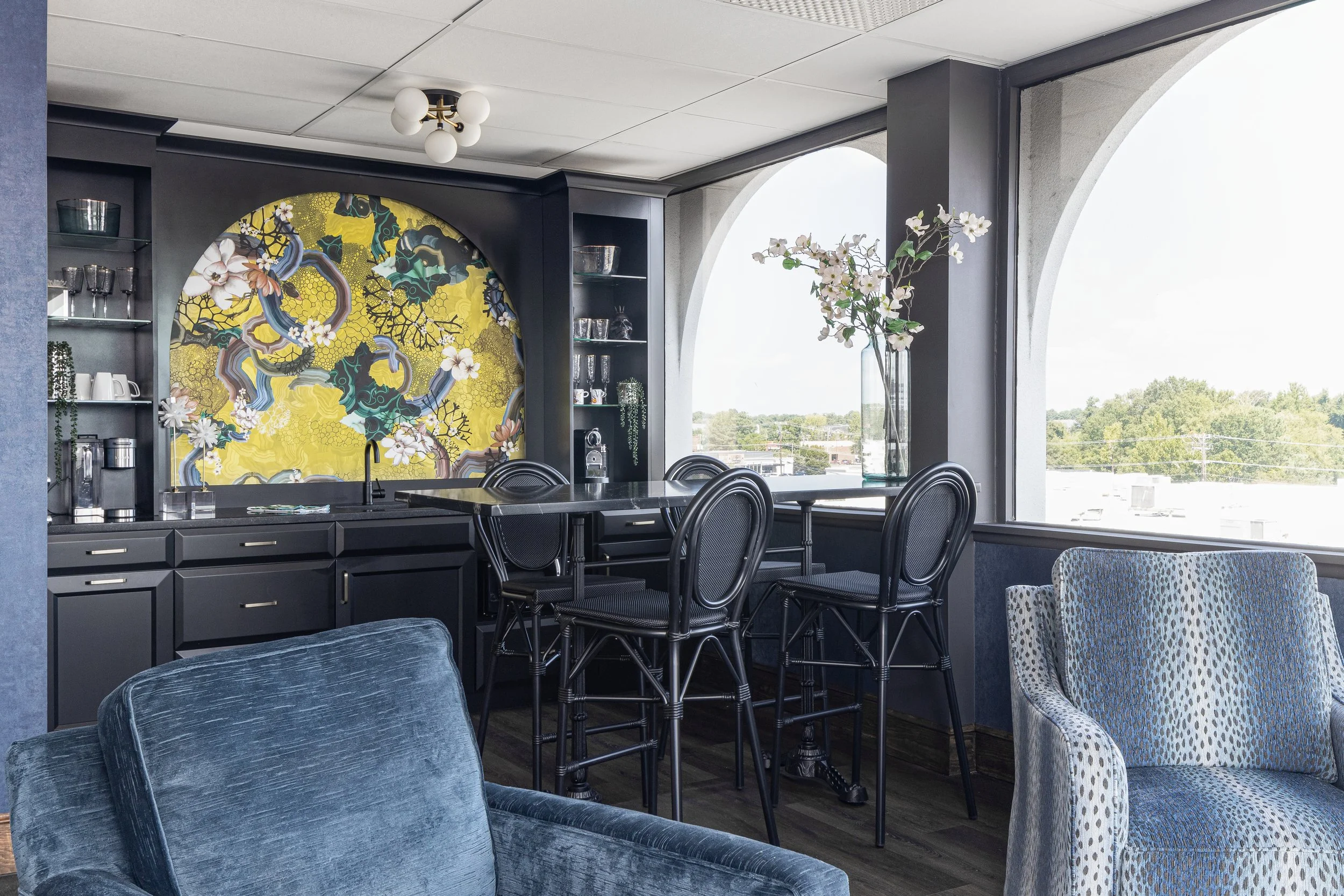
This is our studio. Clearly the bar is the star! It is, of course, a coffee bar.
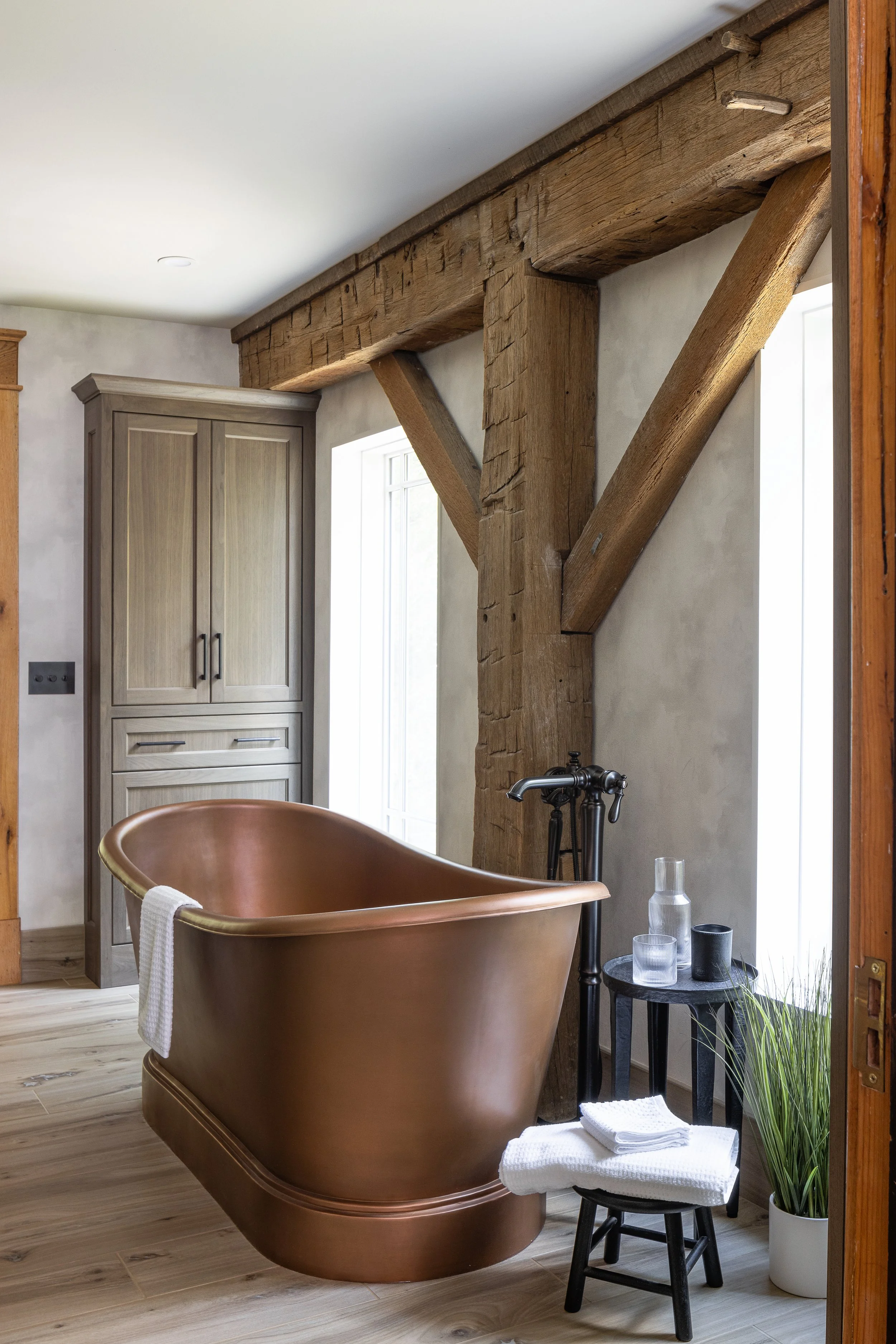
The copper tub steals the show. It was the right choice to complement the wood barn beam structure in the interior of the house.
Hierarchy is about knowing what deserves to stand out — and allowing everything else to support it.
It requires understanding how people experience space, knowing when to edit, and having the confidence to let certain elements stay quiet so others can shine.
THE BIG PICTURE:
Hierarchy is also closely connected to the other principles we've explored throughout this series. Balance helps distribute visual weight. Proportion and scale determine how elements relate to one another. Emphasis gives us a focal point. Contrast can make that focal point stand out. And movement helps guide the eye toward it.
Understanding these principles — balance, proportion and scale, emphasis, contrast, unity and variety, rhythm, movement, and hierarchy — helps explain why professionally designed spaces feel different.
It’s not about rules. It’s about intention.
When we design a room, every decision contributes to the way the space looks, feels, and functions. The goal isn't for one principle to dominate, but for all of them to work together to create something that feels natural and complete.
And that brings us to the end of our Principles of Design series. We hope these posts have given you a new way to look at the spaces around you — and a greater appreciation for the thought behind a well-designed room.
Because when design is done well, you may not be able to name every principle at work.
You just know the room feels right.
Ready to create a space that feels right for you?
Whether you’re starting from scratch, renovating a single room, or simply looking for a fresh perspective, thoughtful design can transform the way you experience your home. Contact Kathy Corbet Interiors to start a conversation about your next project.