
THE PRINCIPLES OF DESIGN: BALANCE
Why a Room Feels “Right” — or Doesn’t
Clients often tell us, “I can’t explain it, but something feels off.” More often than not, balance is the reason.
Balance is about the distribution of visual weight in a space.
Every piece in a room carries weight — furniture, color, pattern, texture, lighting, and architectural features.
This has nothing to do with perfection or matching sets. It has everything to do with how the eye experiences the room.
Sometimes balance is created with furniture. Other times it’s achieved through lighting, texture, or architectural emphasis. The goal is always the same: a space that feels intentional and comfortable to live in.
symmetrical Balance
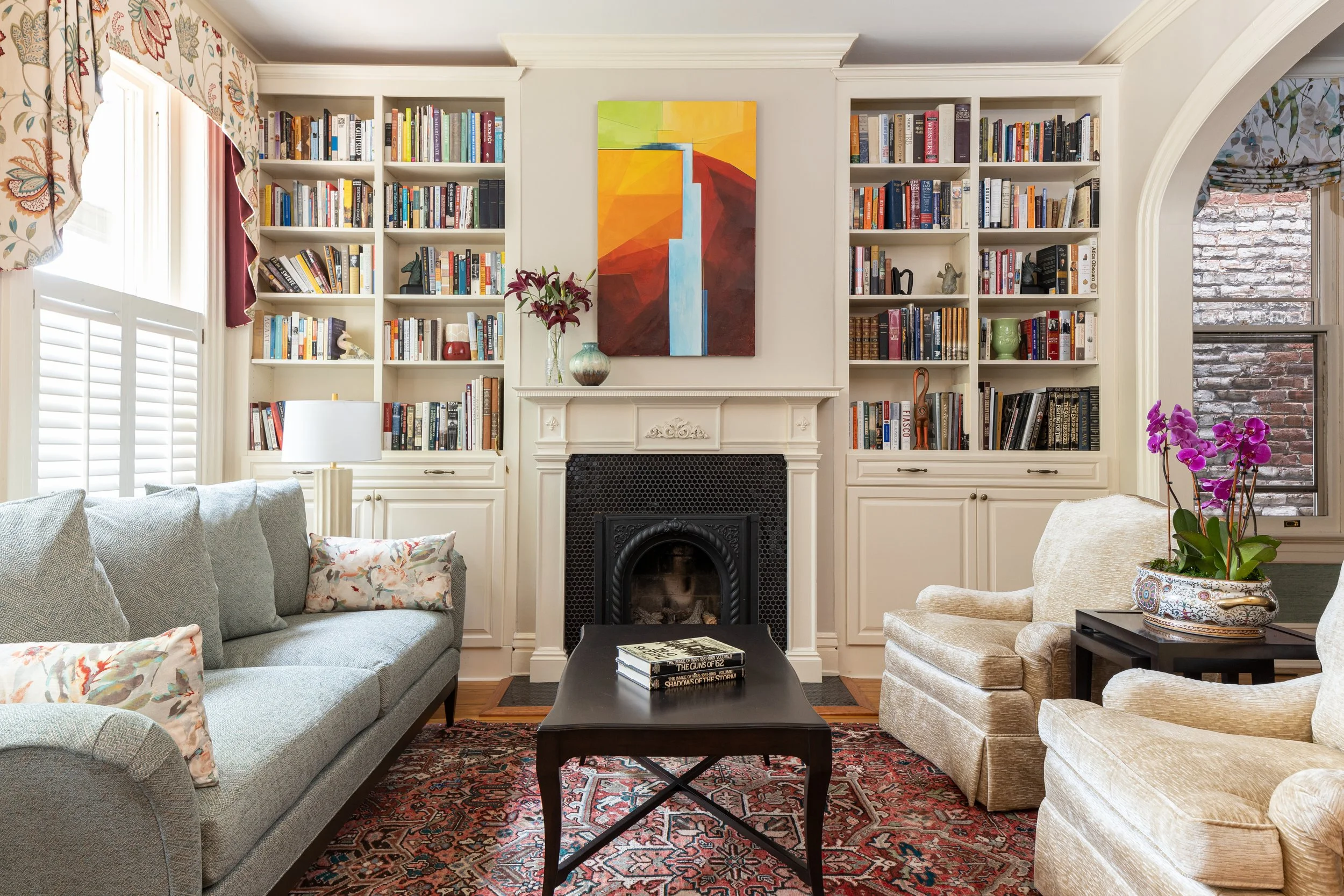
This is the most familiar type — matching elements on either side of a central point.
Matching chairs to balance the weight of the sofa opposite.
Identical built in cabinets on each side of the fireplace.
Symmetry feels orderly and formal. It works beautifully in traditional spaces, primary bedrooms, and rooms where calm is the goal.
Asymmetrical Balance
Asymmetry balances different elements by visual weight rather than duplication.
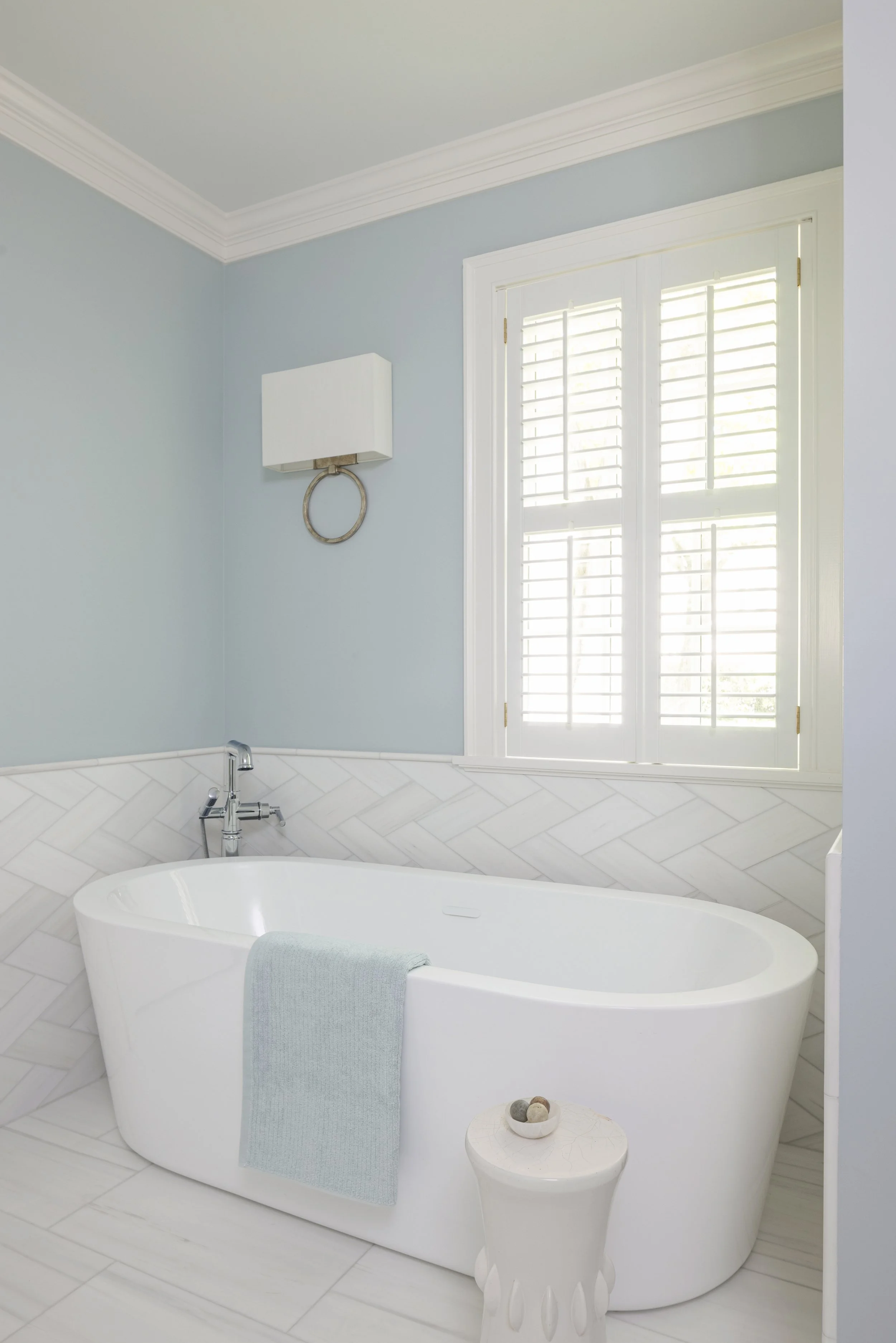
The sconce balances the visual weight of odd window placement in the tub alcove
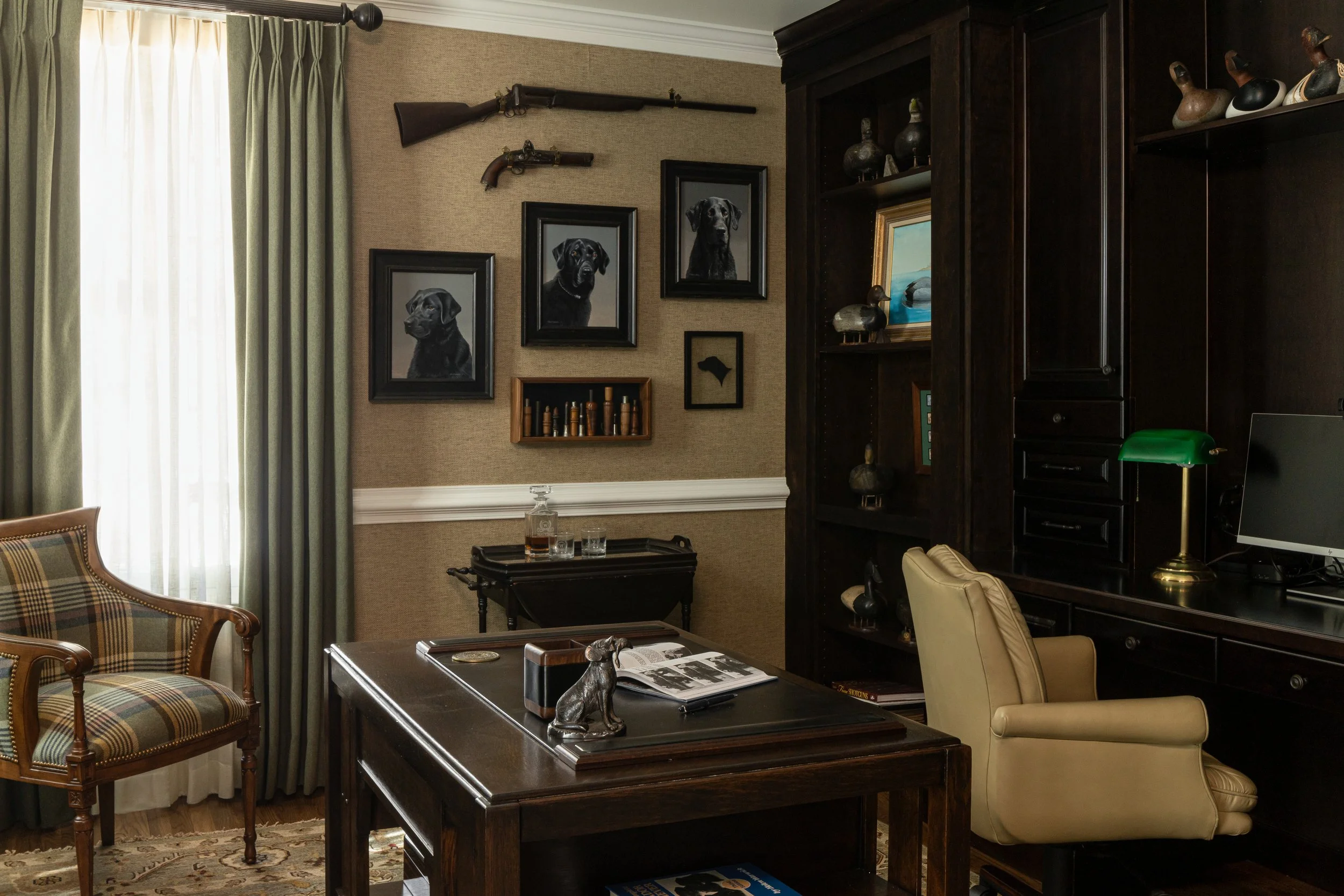
The tiered portraits balance the dimensional pieces in this gallery arrangement
Asymmetrical balance feels relaxed, layered, and lived-in. It’s often what makes a room feel designed rather than staged.
Radial Balance
Radial balance is organized around a central focal point.
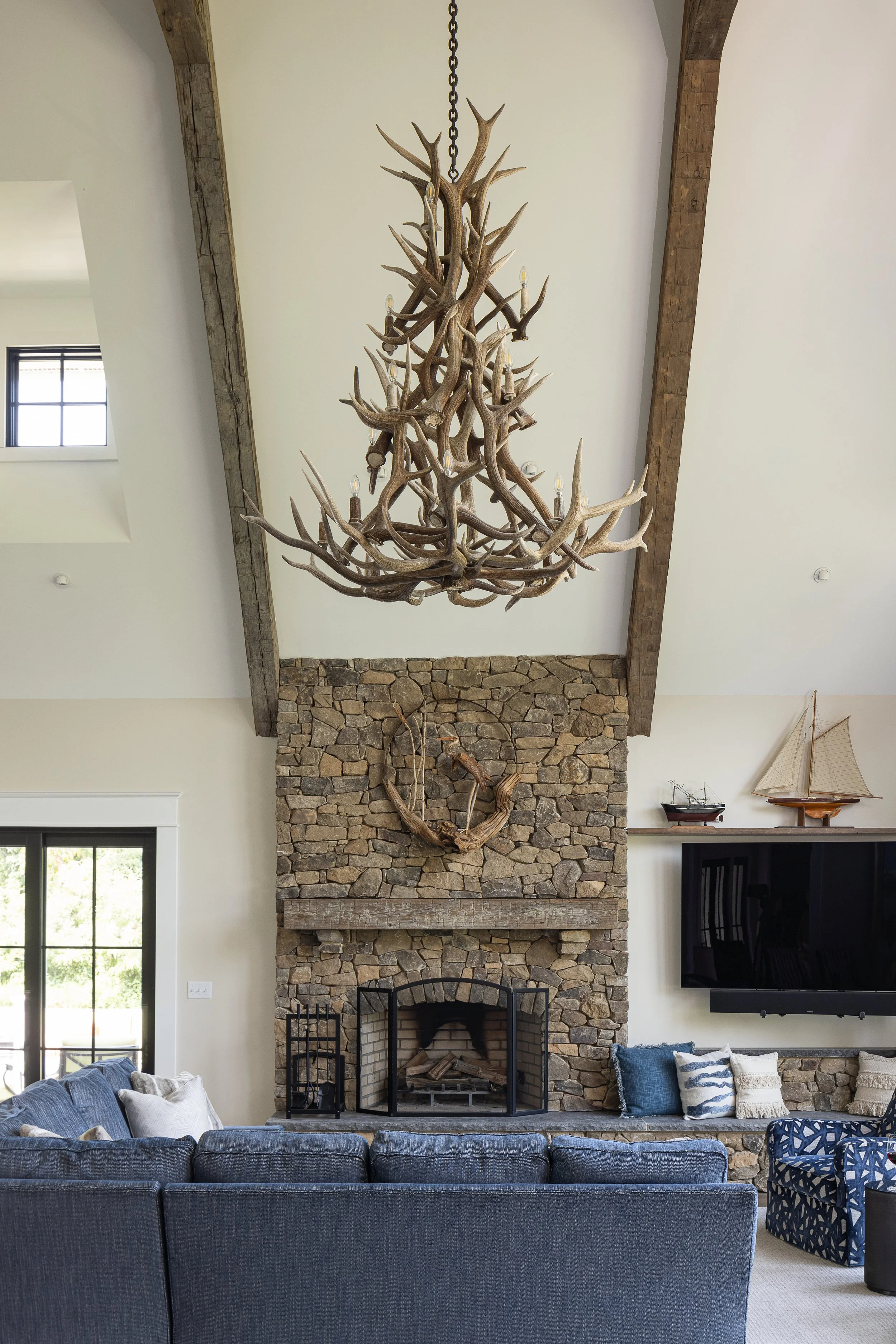
The lounge seating is positioned around the perimeter of the chandelier as well as around the fireplace, and the chandelier anchors the room.
This type of balance creates connection and flow. It works well in gathering spaces.
When balance is right, you may not consciously notice it — but you feel it. The room feels easy. Natural. Resolved.
But balance alone isn’t enough.
In our next post, we’ll discuss movement. Movement isn’t about physical motion — it’s about how your eye naturally travels through a space.
Follow along with the series — or contact us if you’re ready for expert guidance in creating a space that feels beautifully balanced and perfectly scaled for the way you live.