The Principles of Design: Rhythm
How Repetition Creates Flow in a Home
When a home feels easy to move through — visually and physically — rhythm is usually at work. Rhythm is what guides the eye from one element to the next, creating a sense of flow rather than visual stop-and-start.
Clients rarely use the word “rhythm,” but they feel it immediately when it’s missing.
Rhythm is created through repetition and progression. It’s how design elements repeat, alternate, or gradually change comfortably throughout a space. Rhythm prevents rooms from feeling static or disconnected and helps tie separate components into a cohesive whole.
We use rhythm to connect spaces and guide how a home is experienced.
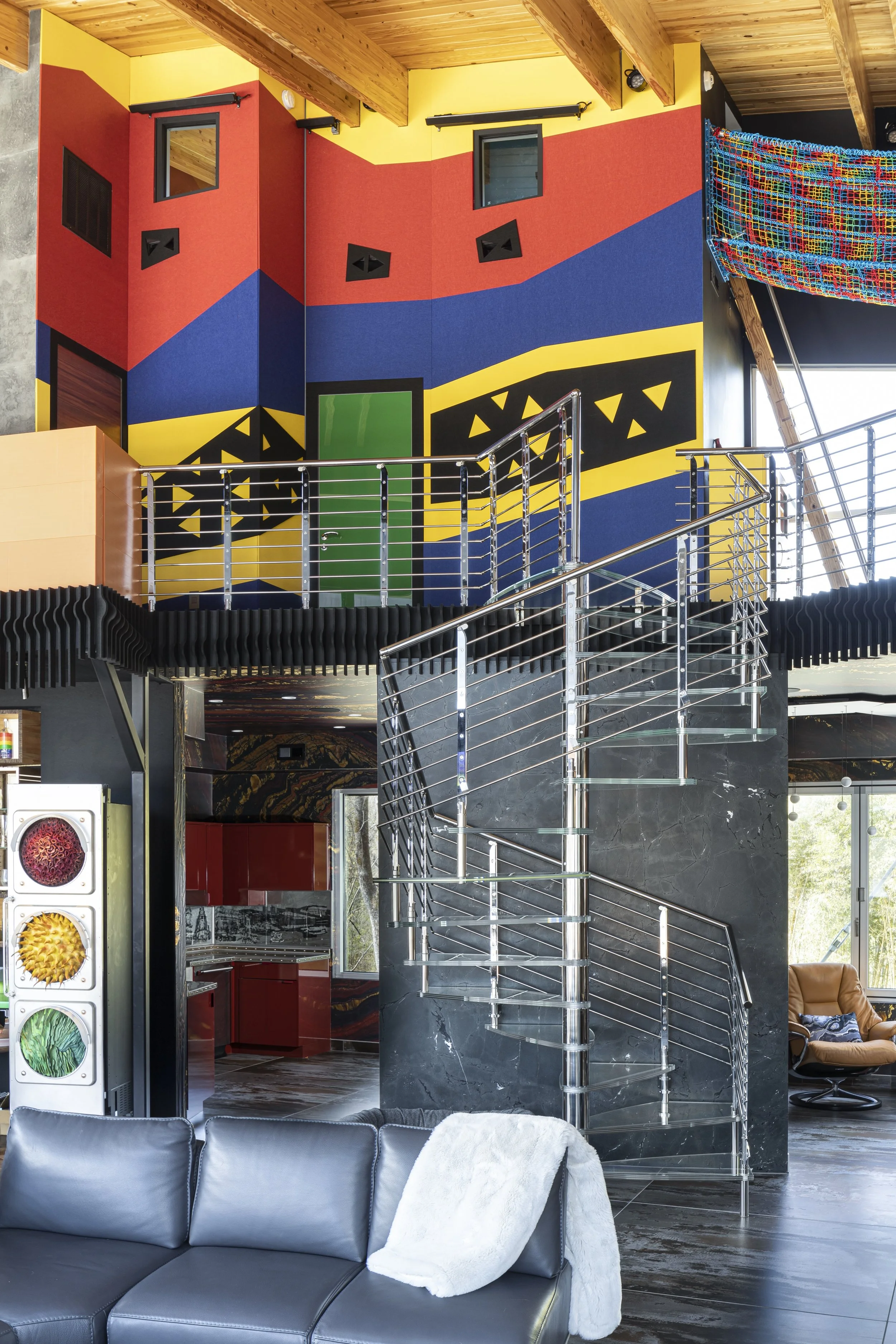
Bold geometric patterns, repeated color bands, and angular motifs create rhythm and movement throughout this space.
The sound deadening material on the walls was designed to match the lines and angles in the spiral staircase. This gives you a nice continuation from the first floor to the second.
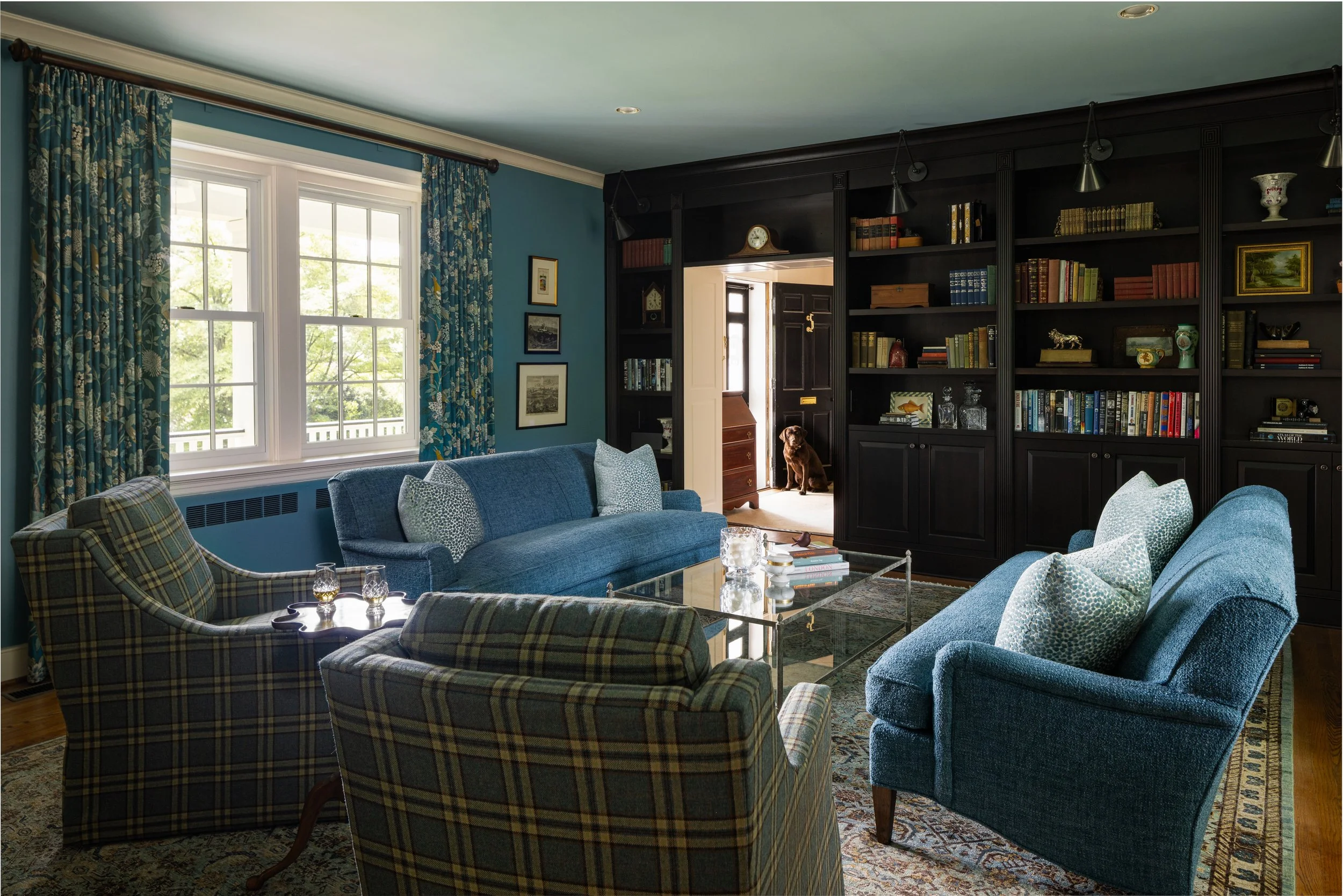
This color drenched room is brought to life by the many textures, patterns and varied tones of the same color. These repetitions establish a cohesive atmosphere.
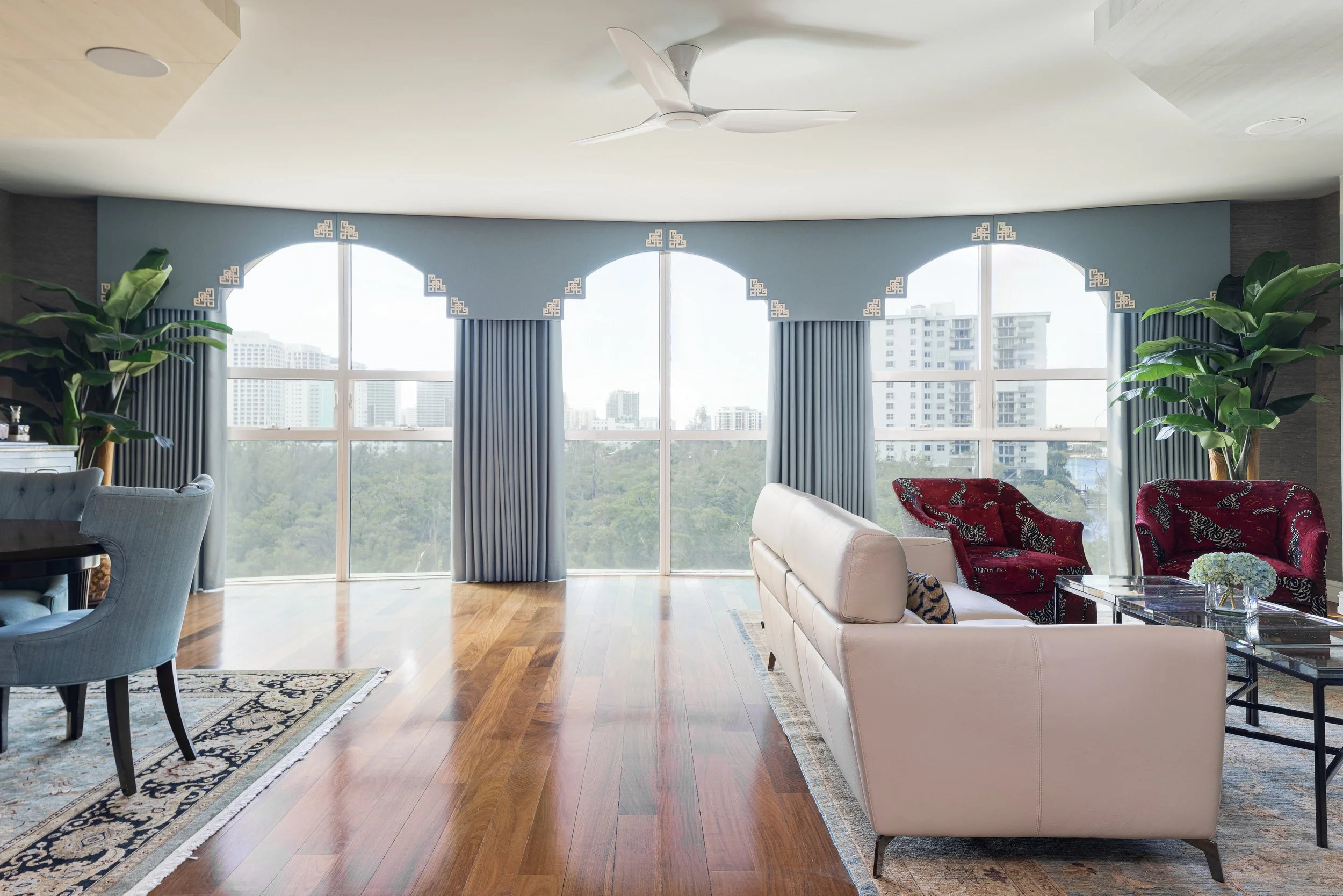
The repetition of the arched windows was soothing. We just made it better by softening the edges with window treatments. The ceilings are covered with a pale hued silk that gently pulls from the colors in the drapes. This keeps your eyes from jumping around and allows you to just take it all in.
Rhythm requires restraint and foresight.
It’s about planning how a space unfolds, not just how it looks in a single photograph. Designers consider how rooms relate to each other, not just how each room stands alone.
When rhythm is done well, a home feels connected, intentional, and quietly sophisticated.
Repetition brings consistency to a design, but what keeps that consistency from feeling too heavy or uneven? In the next post in our Principles of Design series, we’ll explore Balance—the principle that helps designers distribute visual weight and create stability within a composition.
If you’re planning a renovation, new build, or redesign, we’d love to help you create a home that feels beautifully balanced and uniquely yours. Contact us to get started!