
The Principles of Design: Unity & Variety
How a Home Feels Cohesive Without Feeling Boring
Clients often tell us they want their home to feel “pulled together,” but they don’t want it to look matched, predictable, or like a showroom. That balance — cohesive yet interesting — comes down to two closely related design principles: unity & variety.
When these two are working together, a home feels intentional and complete. When they’re not, spaces feel either chaotic or flat.
Unity is what makes a space feel connected — like everything belongs together. It comes from repeating certain elements throughout a space. It gives a home it’s identity.
Variety is what keeps that unity from becoming monotonous. It keeps the eye engaged by introducing contrast, personality, and depth.
You need both. Unity without variety feels boring. Variety without unity feels disorganized. Good design lives in the tension between the two.
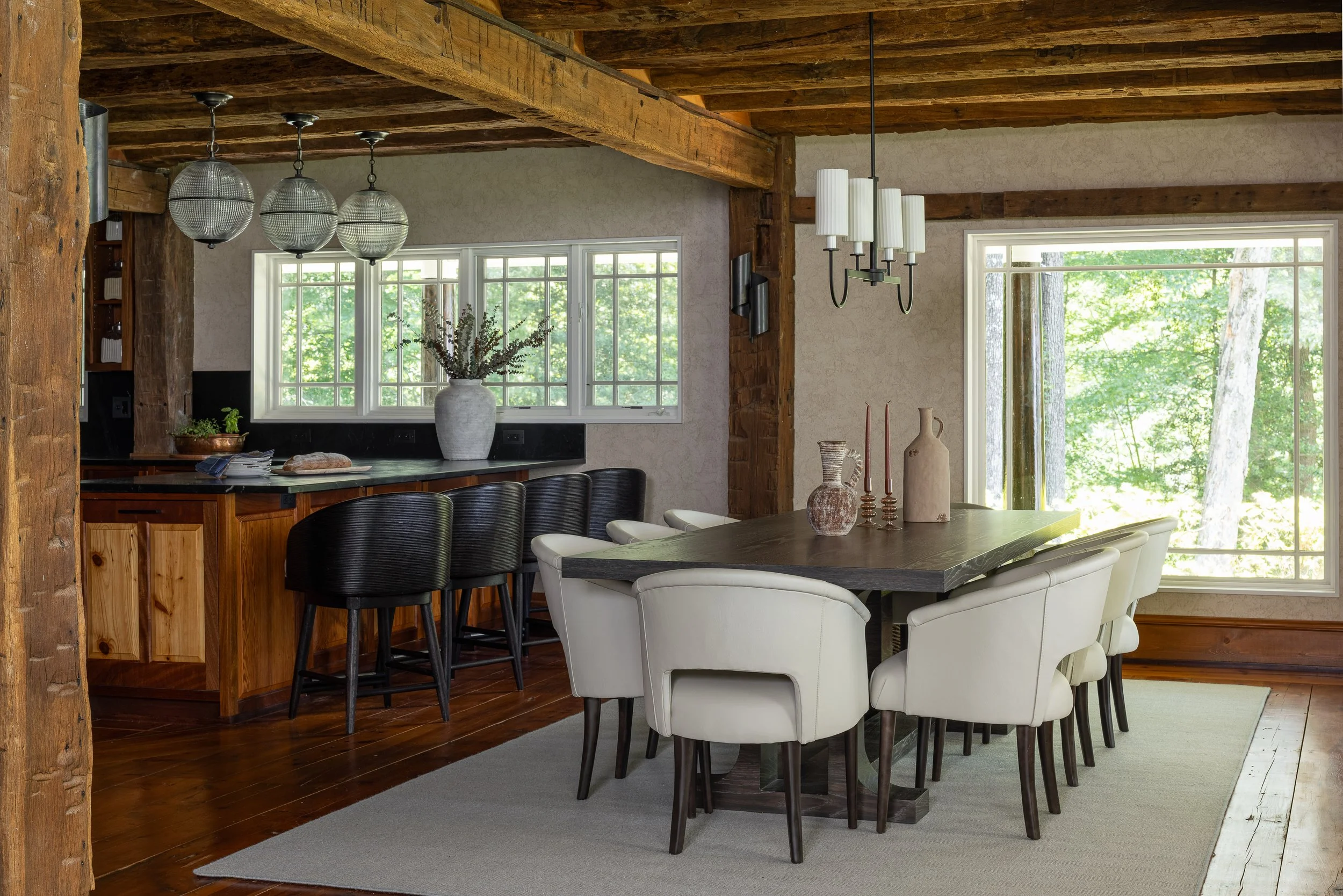
We went with similar seating shapes for the counter and dining seating—rounded seat backs. The materials and style are different but the same shape makes them work together in the same room.
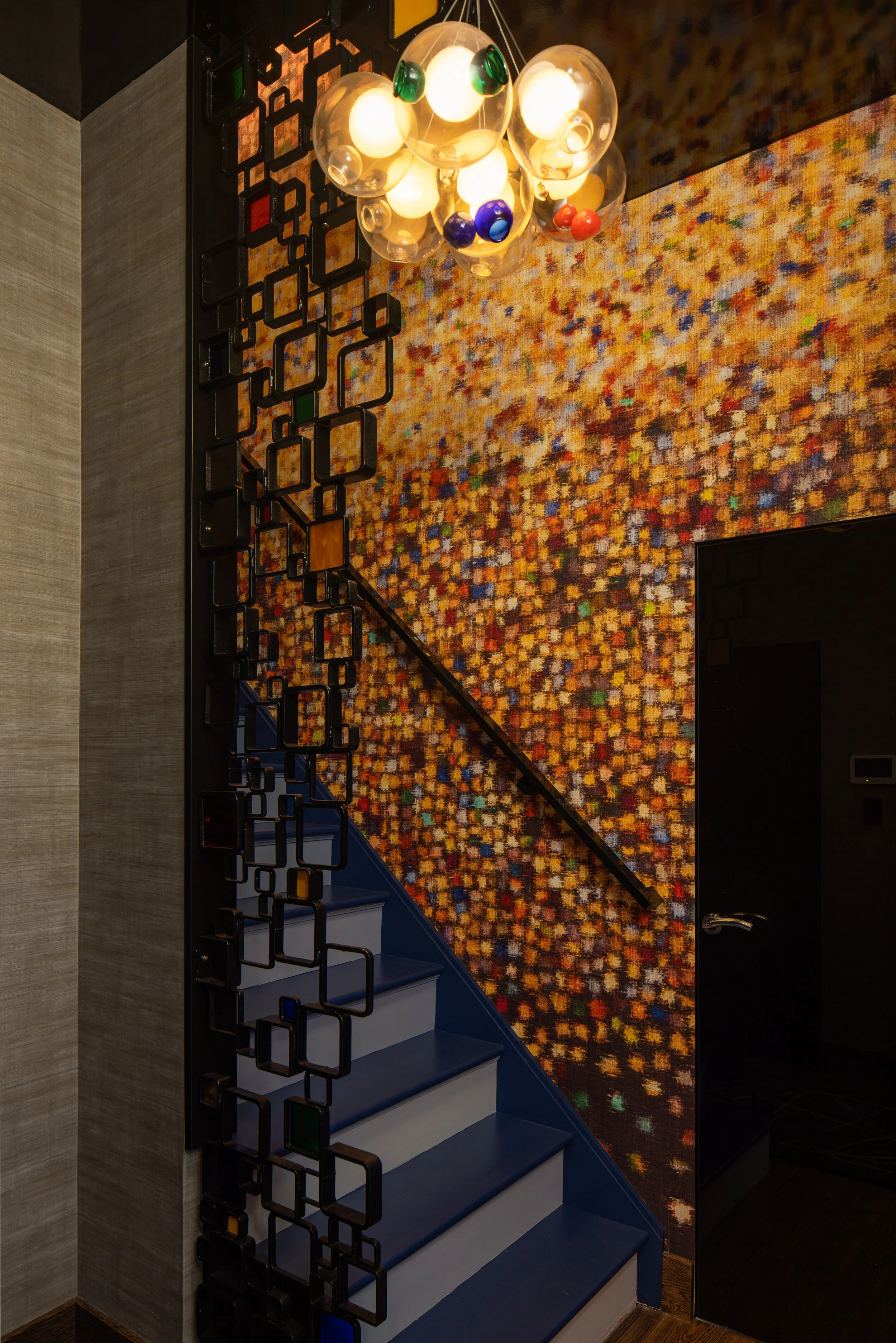
The wallpaper’s soft square motif is echoed in the custom partition, creating cohesion, while the light fixture and stained glass playfully pick up on multiple colors. A rich red wall grounds the composition, ensuring no single element overwhelms the whole. Despite these varied elements, the space feels unified from the repetition of shape and bold colors.
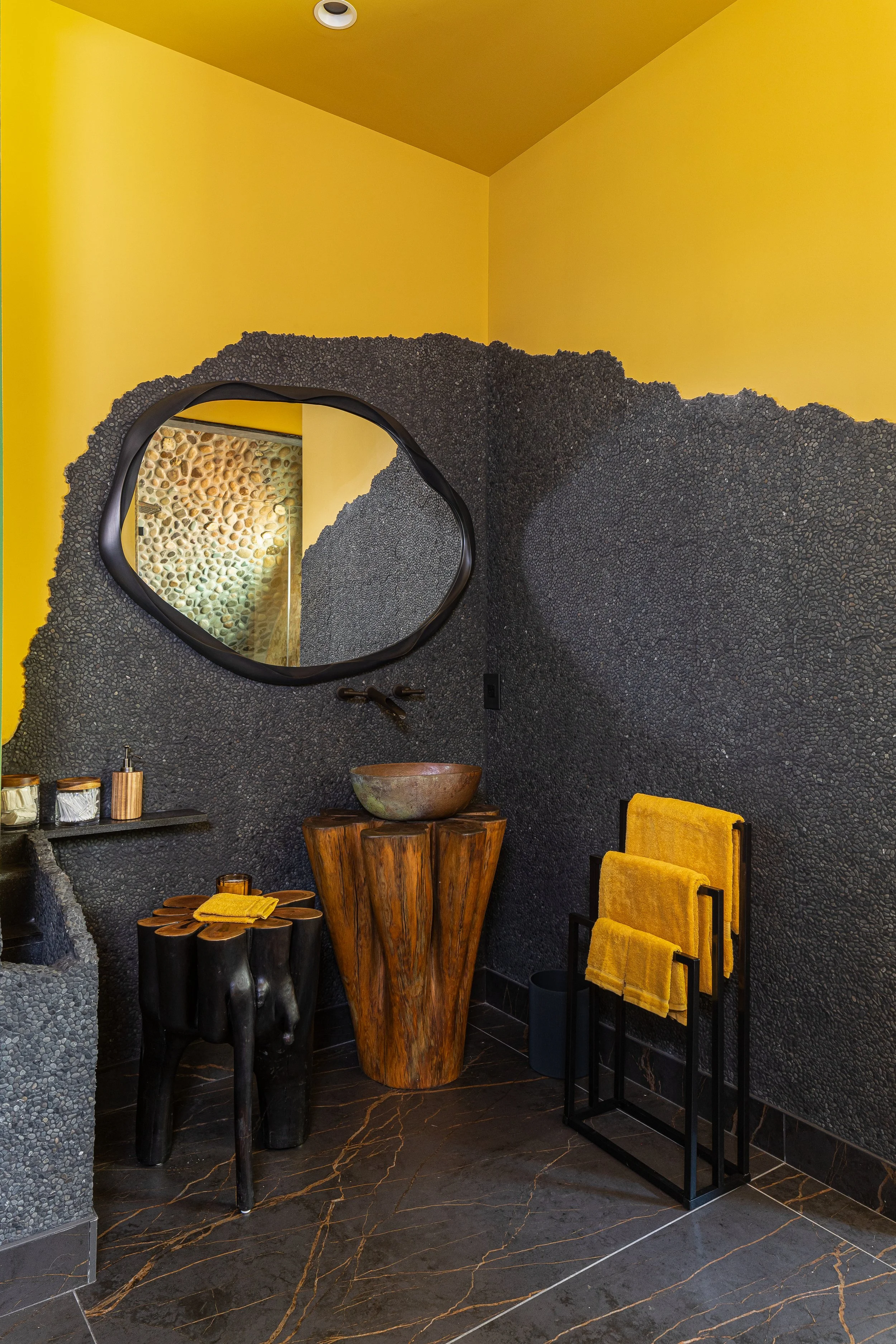
This woodland-inspired bathroom balances unity and variety through its layered materials. Pebble walls, a copper sink, and sculptural wood elements introduce rich texture and contrast, while the warm tones and organic forms tie everything together for a cohesive, grounded feel.
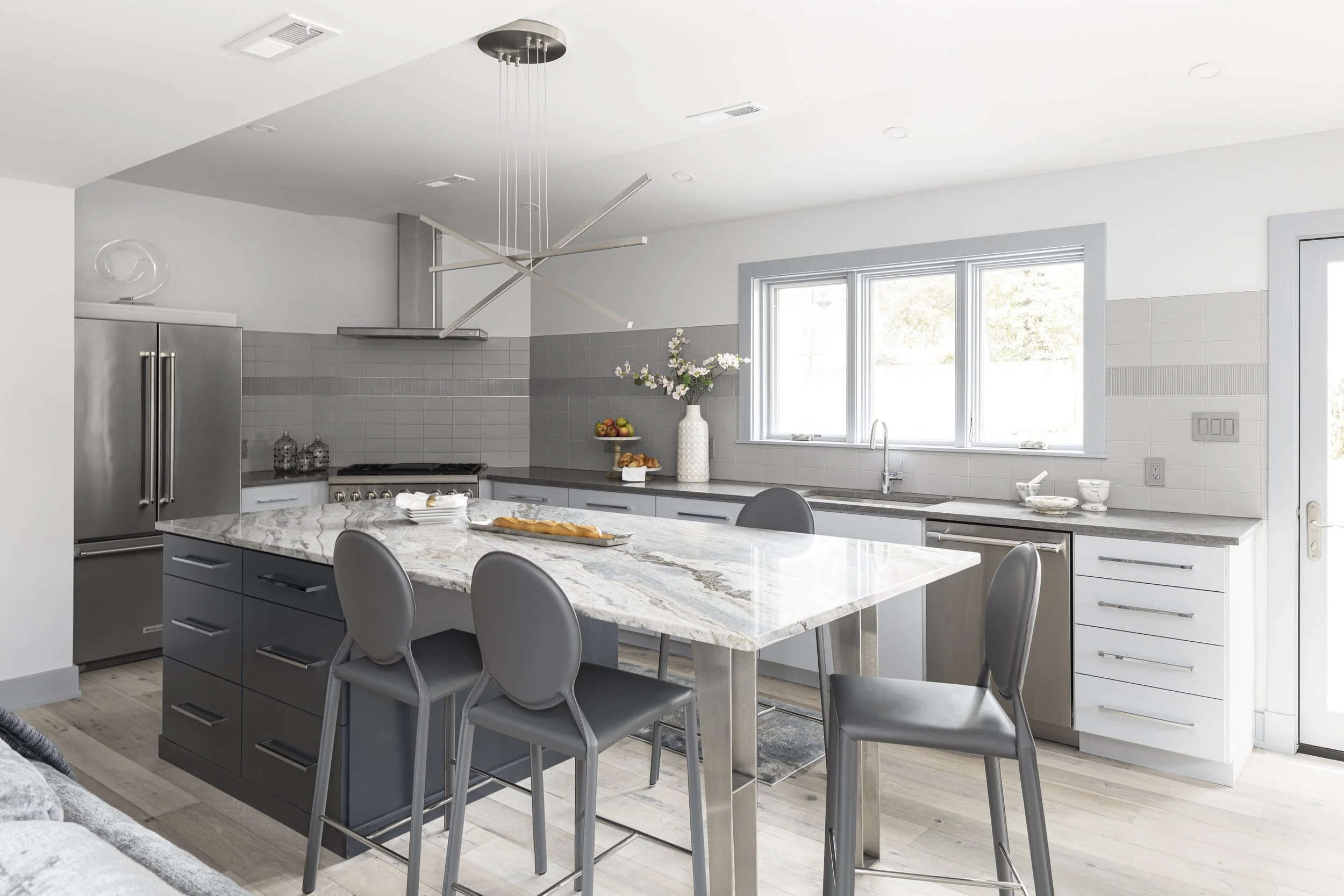
This kitchen demonstrates unity and variety through a restrained palette and thoughtful contrasts. The two-tone cabinetry, layered lighting, and extended backsplash introduce visual interest, while consistent finishes and clean lines tie everything together into a cohesive whole.
Balancing unity and variety requires restraint, experience, and a clear vision. It means knowing when to repeat something and when to introduce change. Understanding the difference between “interesting” and “distracting.”
Unity ensures that everything works together — that the materials, finishes, colors, and architectural details feel connected rather than random. Variety keeps that cohesion from becoming predictable. It introduces subtle shifts in texture, shape, tone, and scale that give a space personality and depth.
Too much unity can feel flat or overly matched. Too much variety can feel scattered. But when thoughtfully balanced, the result is a home that feels layered, curated, and entirely intentional.
In our next post, we’ll explore how repetition, movement, and visual flow guide the eye from one space to the next using Rhythm — creating continuity not just within a room, but throughout your entire home.
If this series has changed the way you see your space, imagine what a fully considered design plan could do. We’d love to help you create a home that feels cohesive, dynamic, and beautifully lived in. Contact us to begin the conversation.